Out of the Darkness Suicide Prevention Walk

520A0879

By Sam Galema

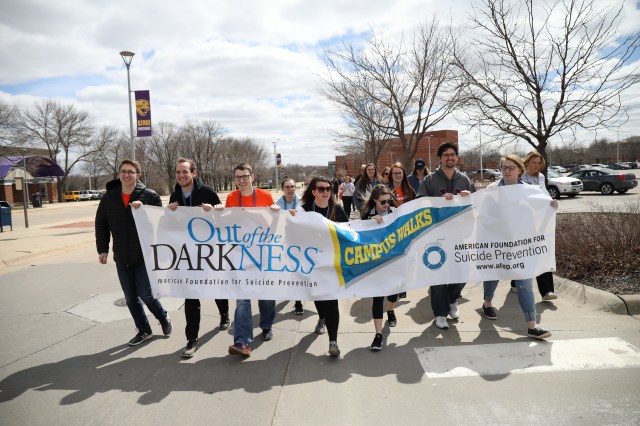
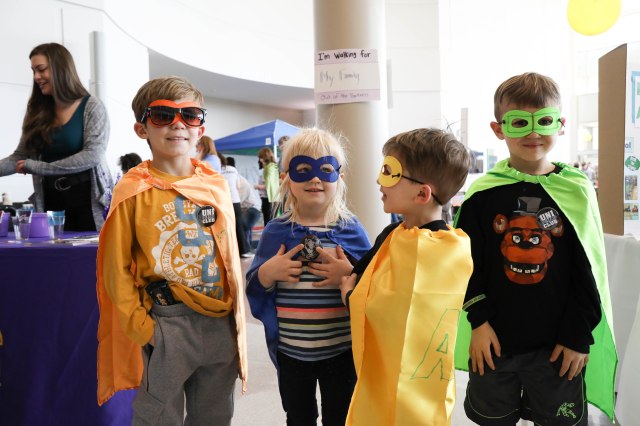
Out of the Darkness Suicide Prevention Walk is an annual event held on the University of Northern Iowa’s (UNI’s) campus at Gallagher Bluedorn Performing Arts Center. Out of the Darkness is focused on addressing the stigma surrounding mental health care and suicide in our current society and working to improve suicide prevention on both local and national levels. The event is open to all ages in our effort to educate and build an aware community to start the conversation of the importance of mental health. Out of the Darkness begins at 12:00 PM including the open lobby with attractions such as community outreach tables, a raffle, rock painting, shirt tie-dying, interactive educational displays, therapy dogs, free food, and much more! At 2:00 PM, the event moves into the Great Hall where attendees are able to listen to a speaker share their mission in mental health and how suicide has impacted their life. After the speaking portion of the event, all who are able walk across campus to show the support of everyone who has been lost to suicide and to show support for all of those who feel like they have to suffer alone. This event is all about creating an open and accepting community of people who are able to share their struggles and support one another in healing. The campus walk is sponsored by the American Foundation for Suicide Prevention (AFSP), and UNI’s walk has created a goal of raising $30,000 at the 2020 walk. All of the funds raised at the walk will go to AFSP to fund educational research, support survivor outreach programs, and advocate for smarter mental health legislation.
520A0838

Most importantly, Out of the Darkness is an event for hope and healing for any person who has been affected by mental health struggles at any point in their lives. The time to stand up to suicide and start talking about these struggles is now. We must work together in order to stand up against the stigma surrounding suicide and bring mental health out of the darkness and into the light where happiness and healing can truly happen.
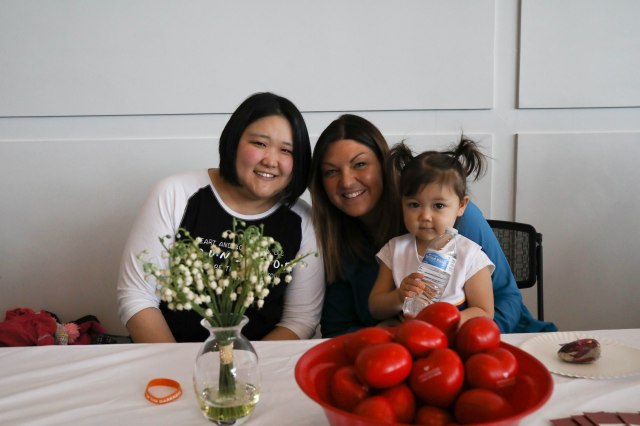
520A0796

Heart and Solutions, LLC is a sponsor of the event and will also be showing their support as a community outreach table! Heart and Solutions, LLC is here to help those who struggle with mental health in the form of Mental Health Therapy and Behavioral Health Intervention Services. Our talented team members utilize person centered, solution focused, cognitive behavioral therapy techniques, as well as a variety of other evidence based interventions and curriculum that are custom tailored to the needs of our individual clients and families.
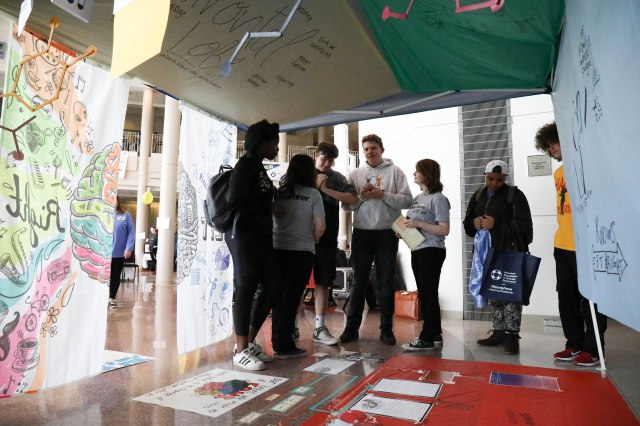
520A0813

This year’s Out of the Darkness Walk is on April 4th at 12:00 PM at UNI’s Gallagher Bluedorn Performing Arts Center. If you would like to register or donate for Out of the Darkness just click on the link below. We hope to see you there!

https://afsp.donordrive.com/index.cfm?fuseaction=donorDrive.event&eventID=6635

Inner-Critic: The Anecdote

By Hayley Downey

Have you ever wondered what it might be like to have freedom from the constant stream of self-criticism? What if instead of an inner-critic you had a compassionate-self?  In order to make that transition, it’s important to understand what might be happening.  Our inner-critic is often trying to help.  It wants to motivate us to do better and to BE better.  According to the National Institute for the Clinical Application of Behavioral Medicine (2020), the problem is that the inner-critic actually leads us to getting stuck in cycles of shame, self-hatred, fear, and anxiety.  The solution is to cultivate a compassionate-self; a source of safety, motivation, and inspiration.  Self-compassion neutralizes self-criticism and reduces shame.

Let’s talk more about the internal shame response.  According to the National Institute for the Clinical Application of Behavioral Medicine (2020), when we experience shame, we have an internal fight, flight, or freeze response.  The internal fight response manifests in self-criticism and self-blame.  The internal flight response includes distraction and isolation.  The internal freeze response manifests in rumination and over-identification. Shame feels blameworthy, makes us feel separate and alone, and feels permanent and all-encompassing.  The good news is that none of this is true.  The truth is that shame is an innocent emotion, connects us to the rest of humanity, is temporary, and only reflects a part of our experience (National Institute for the Clinical Application of Behavioral Medicine, 2020).

Here is the best part. You have the power to transform shame through self-compassion!  Dr. Kristen Neff developed a simple practice to help us understand how to directly target and neutralize the three main components of shame (i.e., over-identification, isolation, and self-judgement) with self-compassion.  She calls it the Self-Compassion Break.  The three components are mindfulness (which neutralizes over-identification), common humanity (which neutralizes isolation), and self-kindness (which neutralizes self-judgement) (National Institute for the Clinical Application of Behavioral Medicine, 2020).  Let’s look at each component of the Self-Compassion Break, as defined by Dr. Kristen Neff, so that you can use it the next time you find yourself experiencing shame.  Mindfulness means recognizing the current struggle as temporary.  Common humanity is recognizing that you are not alone and that everyone experiences suffering.  Self-kindness is offering yourself supportive touch (e.g., placing your hand over your heart or crossing your arms with your hands on the opposite elbows in a sort of hug) and words of kindness (National Institute for the Clinical Application of Behavioral Medicine, 2020).

Let’s give it a try! Place your hands gently over your heart and say, “This is a difficult moment.  This is part of the human experience.  May I offer myself the kindness and compassion I need,” (National Institute for the Clinical Application of Behavioral Medicine, 2020).

Find out how self-compassionate you are by taking Dr. Kristen Neff’s test: https://self-compassion.org/test-how-self-compassionate-you-are/

Learn more about Dr. Kristen Neff’s Self-Compassion Break by watching her short video: https://self-compassion.org/exercise-2-self-compassion-break/

Find free guided meditations, self-compassion exercises, tips for practice, and other resources here: https://self-compassion.org/ (“Practices” tab)

43828350_2296200753742345_1783773989034786816_n

Heart and Solutions can help you on your self-compassion journey through our mental and behavioral health services.  We offer individual, marriage, and family therapy as well as behavioral health intervention services (BHIS).  We would love to help you find and cultivate your compassionate-self!

Resources:

National Institute for the Clinical Application of Behavioral Medicine. 2020. Master series on the clinical application of compassion. [Webinar].

From the Mind of a Behavioral Health Intervention Service (BHIS) Provider

By Alexa Jans

natasha-spencer-61oMU1P6jxc-unsplash

Mental health plays a role in everyone’s daily lives. Mental health involves our emotional and social well-being, which affects how we all think and act. Our mental health also determines how we handle different stressors in our daily lives and the decisions we all make. Someone with positive mental health may be able to deal with various stressors through different coping skills they have developed throughout life. These stressors could include anything from waking up with a sick child, being fired from work, or losing a loved one to cancer. Those who have developed good coping skills may handle these stressors by taking several deep breaths, participating in yoga, or seeing a counselor/therapist on a regular basis. Even though millions of individuals, both adults and children, suffer from mental health disorders, many do not seek treatment from mental health professionals.

janko-ferlic-specialdaddy-oWDRVgk04EA-unsplash

There are many potential consequences to not seeking help from mental health professionals. Through working with Heart and Solutions, LLC, several of the consequences I have seen with my adolescent clients include skipping school due to anxiety, choosing to vape underage in order to relieve stress, or self-harm. These potential consequences are why counseling and therapy are important and can be life-altering.

43828350_2296200753742345_1783773989034786816_n

Counseling through Heart and Solutions, LLC not only helps clients develop different healthy coping skills giving them positive techniques to deal with stressors, but it also gives them consistency, which is often undervalued. Many children do not have consistency in their lives. This could be because their parents choose to not be involved in their lives or the children were taken away from their homes and placed elsewhere. Heart and Solutions, LLC is making a large impact on the lives of our clients by giving them positive ways to handle different stressors as well as being a consistent and safe person in their life.

Heart and Solutions, LLC Partners with Foundation 2

By Colleen Grote, PhD, LMHC, RPT

foundation-logo-w-text

Heart and Solutions is excited to announce a new partnership with Foundation 2 and their J-FAST program! Foundation 2 is a nonprofit human service agency that provides crisis prevention and intervention for a variety of individuals. Foundation 2 is committed to promoting positive youth development, suicide prevention, and safe community development. One of the many services that Foundation 2 provides is their Juvenile and Family Assistance and Stabilization Track (J-FAST). 

priscilla-du-preez-WFBVn6fSgys-unsplash

J-FAST is a part of Foundation 2’s Mobile Crisis Outreach program that works with Linn County families of youth (ages 5-17) at risk of hospitalization, committal, or residential placement. This program is designed to help parents or school staff when youth are struggling with mental health concerns, substance abuse, self-harm, suicidal thoughts, or violent behaviors.

43828350_2296200753742345_1783773989034786816_n

As a partner with Foundation 2, Heart and Solutions is able to provide outpatient therapy services to youth and families who access J-FAST and Mobile Crisis Outreach services and join Foundation 2’s mission to create safe communities! 


Seasonal Affective Disorder (SAD)

rolf-hecken-WCrchkdrlwI-unsplash

Are you in a bad mood that you are blaming on waking up on the wrong side of the bed, a rough morning, or a bad interaction with a colleague? You may be pointing your finger at the wrong thing. Winter has reared its head early this year- Did you know that it could be the season that has you down? Many weather factors including sunlight, temperature, and rain can impact your mood either by directly affecting your hormones or by causing secondary issues that can bring your mood down.

Exposure to sunlight produces a hormone called serotonin (nicknamed the “feel good” hormone). Therefore, when there is a lack of sunlight, such as in the shorter days of winter, consistent cloud cover, or for people working the night shift, less serotonin is produced and could result in a lower mood. This can be combated with the use of a daylight lamp that mimics sunlight.

As most of us Iowans can agree, temperature also influences our mood. This cause has a secondary impact as it does not directly affect hormones, but our body’s energy usage. In cold weather (which no longer seems to be restricted to winter), our bodies need to keep warm. Energy is used to accomplish this with increasing heart rates. Spending energy here means less energy for other activities. This can also explain those extra few pounds some of us tend to put on during pre-bathing suit season as we may eat more to keep up with the output of this energy. The flip-side of the coin is that our body still needs energy to digest the food, so this may cause further lethargy (and just when I thought I had a good excuse for that second piece of pie!) Instead, it is important to eat minerals and vitamins that help boost our immune systems, get plenty of sleep, and keep warm. Not only does this help our bodies as they work harder in the cold, but also to keep us well as flu and colds are more common this time of year because our immune system is already working hard.

spencer-backman-1KdD2iBlnRI-unsplash

Rain is another mood impactor that affects us because it may cause a decrease in our social lives. Some of us tend to bunker down when that weather comes in instead of trekking out to meet friends or attend events. Aside from sunlight, socializing has a big impact and works as a type of anti-depressant for our weather caused low moods and lethargy.

krists-luhaers-xbJHiTMl46E-unsplash

The issues discussed above are normal for people who must suffer the perils of cold winters, but more serious is seasonal affective disorder (SAD). SAD is a depression brought on by the changing of seasons. Most commonly, it appears in late fall and continues throughout the winter causing moodiness and low energy. SAD is different from the other problems discussed because its symptoms are so severe that it impacts the daily lives of those who suffer from it. Additional symptoms of SAD include a loss of interest in activities that were once enjoyed, sleeping problems, changes in appetite and/or weight, agitation, sluggishness, problems with concentration, feelings of worthlessness, hopelessness, or guilt, and/or thoughts of suicide or death. We all have days where we feel down, but if these feelings persist for days at a time, and you do not have the motivation to do activities you enjoy, it is time to see your doctor.

kelly-sikkema-MzaGpQw5gok-unsplash

Is all hope for good moods and positivity lost for a whole season (or possibly two seasons as we are seeing now)? Not to fear! Weather such as rain, wind, sunlight, and temperature may only have a negative impact on bad mood. If you are already in a good mood, these factors may not be able to bring you down. Additionally, when it is possible, being outside and being physically active is found to increase well-being and lower stress levels. Take care of yourself, be mindful of your mood, and don’t be afraid to seek help when needed.

43828350_2296200753742345_1783773989034786816_n

Heart and Solutions is available to help anyone (adults and children) suffering from depression or SAD. Our team of therapists and behavioral health intervention service (BHIS) providers will work with you to develop coping skills and help relieve the symptoms of these disorders so that you can persevere and thrive.

References

Gregorie, C. (2014, Jan. 14). The surprising ways the weather affects your health and well-being. Huffington Post. Retrieved from https://www.huffingtonpost.com/2014/01/14/climate-health_n_4568505.html

Loewen, S.C. (2008, Nov.). Effects of weather on human emotions. Retrieved from http://www.healthguidance.org/entry/15843/1/Effects-of-Weather-on-Human-Emotions.html

Mayo Clinic Staff. (2018). Seasonal affective disorder (SAD). Retrieved from https://www.mayoclinic.org/diseases-conditions/seasonal-affective-disorder/symptoms-causes/syc-20364651

The Importance of Sleep for School Aged Kids


annie-spratt-9GEzaxGFCJc-unsplash.jpg

As adults, we have (and are) experiencing difficulty getting the sleep we need. We have kids to wrangle, homes to clean, jobs to do, and countless other demands on our time. However, we also know how this lack of sleep impacts us: grouchy, difficulty concentrating, ect. We know the negative impacts of sleep and we try to get the sleep we need when we can. For school aged kids sleep is just as important, but they may not realize it. They are not necessarily able to connect that they cannot focus today because they only got five hours of sleep last night. This can lead to confused frustration at their struggles but another late night playing video games tonight.

ludovic-toinel-nGwyaWKFRVI-unsplash.jpg

Besides the draw of technology, school aged kids are having a hard time getting in their 10 to 11 hours of needed sleep because of school obligations (such as homework), activities that take up their evenings, and going to bed later. Besides these demands, a variety of sleep problems are more common for kids in this age group: sleep terrors, nighttime fears, sleepwalking, teeth grinding, noisy breathing, and snoring. All of these decrease the quality of sleep kids get.

Just like adults, a lack of sleep impacts kids’ moods (difficulty regulating emotions, irritability); behavior (hyperactivity, noncompliance); and cognitive ability (problems with creativity, decision making, reaction time, memory, and attention). This makes for a frustrating day for the kids, teachers, care takers, and guardians.

irina-murza-yH2WMrdLMYs-unsplash.jpg

Knowing your kiddo needs sleep and getting him/her to sleep at an appropriate bedtime are two different things. So, here are a few tips to help your kid sleep and sleep well. Create a regular schedule for sleep- go to bed and wake up around the same time every day. Keep a consistent routine for bedtime- include activities that are calm and enjoyable as well as one-on-one time with a guardian to create a connection with your kid every day. Create a soothing environment for sleep- a bedroom that is cool, dark, quiet, and comfortable (no TV or electronic devices in the room). Create and maintain limits- especially if your kid tends to stall, set clear limits such as when lights are off and how many stories will be read. Turn off electronic devices- TVs, computer games, and using the internet are all stimulating activities, not calming ones. The use of these devices around bedtime are sure to cause sleep problems. Avoid caffeine- be aware that caffeine can be found in lots of substances including iced tea, soda, and coffee-based products. Lastly, if your kid is having trouble sleeping and/or is having sleep problems like the ones described above that affect him/her during the day, be sure to talk to your kid’s doctor.

43828350_2296200753742345_1783773989034786816_n

Having a hard time developing an effective bedtime routine, or is your kiddo still having disruptive days even when he/she gets the sleep he/she needs? Heart and Solutions, LLC’s staff of therapists and behavioral health intervention service (BHIS) providers work with children (and adults and families) who experience behavioral problems that negatively impact their lives. Through our three services: mental health therapy, behavioral health intervention services (BHIS), and marriage and family therapy we can help to build coping skills and work through problems/issues to make your days better.

Reference

Nationwide Children’s Hospital. 2019. Sleep in school-aged children. https://www.nationwidechildrens.org/specialties/sleep-disorder-center/sleep-in-school-aged-children

Adverse Childhood Experiences (ACEs)

janko-ferlic-specialdaddy-oWDRVgk04EA-unsplash

Adverse Childhood Experiences (ACEs) are used to designate all types of neglect, abuse (emotional, physical, and/or sexual), and other traumatic experiences (such as household challenges including domestic violence, substance abuse, mental illness, separation/divorce, and/or the incarceration of a household member) that happen to children under 18 years old. They put children at a higher risk for chronic health conditions, risky health behavior, and the potential for early death. The number of ACEs that occur is positively correlated to these outcomes- the higher the number of ACEs, the higher the risk. ACEs can have a lasting impact such as injury (burns, fractures, and traumatic brain injury), mental health issues (PTSD, anxiety, depression, and suicide), maternal health issues, (unintended pregnancy, pregnancy complications, and fetal death), infectious diseases (STDs and HIV), chronic diseases (diabetes and cancer), risky behaviors (unsafe sex and alcohol and drug abuse), and opportunities (such as on education, occupation, and income). It is crucial to know that creating positive experiences and/or protective factors can prevent ACEs and protect a child from the negative outcomes of ACEs they have endured.

artur-aldyrkhanov-3bwMp-TyxOE-unsplash.jpg

The key for a child who has endured ACEs is resilience. Resilience is the ability to bounce back from a bad experience. We can support children in developing this vital tool by helping them build healthy coping skills such as mindfulness, mediation, exercise, and stable sleep routines. We can empower children by building their problem-solving skills and helping them process their situation. It is also crucial that children know how to identify their feelings, are able to talk about them, and know how to appropriately express them. Keep in mind that a child’s behavior may be influenced by their experience of ACEs. Here, we wonder, “What happened to you?” and not, “What’s wrong with you?” Behavior is communication.

In order to do the above, we need to build our understanding through empathy. Have you experienced any ACEs? Have they had a physical, emotional, or professional impact on your life? What helped you cope with those ACEs? By asking yourself these questions, you can better help those in need.

43828350_2296200753742345_1783773989034786816_n

Heart and Solutions, LLC’s staff of therapists and behavioral health intervention service (BHIS) providers work with children, adults, and families who have endured ACEs through our three services: mental health therapy, behavioral health intervention services (BHIS), and marriage and family therapy. Through these three avenues, we can help those affected by ACEs to build coping skills and work through problems/issues brought on and exacerbated by ACEs.

References

CDC. (4/9/2019). About adverse childhood experiences. https://www.cdc.gov/violenceprevention/childabuseandneglect/acestudy/aboutace.html

Joining Forces for Children. (2019). What are ACEs? http://www.joiningforcesforchildren.org/what-are-aces/

The Untold Story of Heart and Solutions, LLC: The Moment I Knew Who We Were as a Company.

By Julie Johnson, MA, NCC, LMHC, Doctoral Candidate in Behavioral Health Leadership (President and Founder of Heart and Solutions, LLC)

IMG_0835.JPG

It was 2014, we had four team members employed and a fifth preparing to come on board.  I was at home working at our first Heart and Solutions Office – our dining room table.  I couldn’t feel my hands, my heart was pounding, and the tears flowed from my unblinking eyes as I watched my dream agency disappear one month after I had found the courage to create it.  I still held the phone in my hand.  The voice of the Magellan representative still a fresh wound in my ears and heart: “Your contract may take another six months to get signed.  We just have no way of knowing when it will be processed.”

We had done everything “right.”  We had obtained a provisional Chapter 24 approval, we had credentialed with the insurance providers, and we had received notice that our Magellan application was approved to see Medicaid clients.  We didn’t understand that “approved” and “signed” mean two totally different things in the world of insurance.  “Does this mean we can’t bill for sessions until it is signed?” I asked. We would not be able to bill for sessions until the contract was signed at Magellan’s headquarters in Minnesota.  I asked if we would be able to back bill for the time between now and when the contract was signed, and the answer was a firm “no.”

IMG_1675.JPG

We had 30 clients counting on us.  We had four team members and their families relying on paychecks that we had agreed to write.  I called Joe (my husband and co-founder) immediately.

“We can’t bill Medicaid until they sign the stupid contract,” I sobbed into to the phone.  Joe, in a bad cell area and in the middle of fishing, immediately thought that someone had died due to the hysteria he was hearing on my end of the phone.  Once he figured out that I was talking about insurance and got the gist of how hopeless the situation felt, he abruptly said, “Let’s talk about it when I get home.  I am fishing.”

I spent the next two hours alternating between rage at the insurance company and despair.  How could our agency close only a few weeks after it had begun?  How could I let down those who believed in us and came on board to support us?

43828350_2296200753742345_1783773989034786816_n.jpg

Joe is in charge of the budgeting and the numbers.  He is not a counselor, he has had no counselor training other than being married to one for eight years.  What I was about to propose to him when he walked in the door was absolute madness.  It made zero financial sense and would hurt us financially much more than when I quit my high paying job to build this dream.  I wanted to propose that we pay payroll out of our savings and his paychecks for the next six months until we could start billing Medicaid.  I mentally prepared my arguments: the clients need our services, we didn’t start this company for the money, our team members need to be paid.  I rehearsed this over and over in my mind preparing myself for the fight of my life.

Joe walked into the kitchen two hours later.  I took a deep breath and prepared to present my case.  Joe slowly put down his fishing gear and unlaced his boots: “Well, we’ll just have to see the clients for free won’t we?” he said.  “What about the counselors?” I asked not sure I had heard him right.  “Well, they’ll need to be paid too.  Good thing we have our savings account and a paid for house.”  That was the moment.  That was the defining moment of who we were, are, and always will be as a company.  It was the moment I realized I was in business with a partner and spouse that truly understood what I was doing and why it mattered and that even though it would end up costing us all of our savings and every dollar of his paycheck that didn’t go to food or utilities, none of that mattered.  I knew that the foundation of that moment, of that decision, was solid ground to build this dream.

IMG_1695.jpg                    IMG_1694.jpg

(first official office in the back of a Hallmark store)

It did take five months to start getting paid for our claims.  We saw our clients for free and paid our team members for their sessions.  We ate cereal and homemade soup, I brought food with me to meetings at restaurants.  Our office furniture was cheap or free.  It wasn’t pretty or stylish, but all of our money was going to making payroll each month.  I look back on that time with fondness and a strong desire to never, ever do that again!  It was one of those situations that I can look back on with gratitude for the fact that I cannot see the future.  If I could have seen those few months prior to starting Heart and Solutions, I never would have done it.  What a gift it is to only be able to see the next right step, the next right decision in front of us and to know that I get to do it with a partner who truly understands who we are as a company.


Shh! My Brain Needs Quiet

kristina-flour-BcjdbyKWquw-unsplash.jpg

We tend to live our lives to the beat of background noise: podcasts, music, books on tape, TV, ect. Everything we do from showering to driving is accompanied by some type of self-chosen noise. Silence is hard to come by maybe even an uncomfortable and unwelcome void. Noise pollution, however, has been correlated with heart disease and sleep loss. So, are we expected to live a life of silence for our health?

chairulfajar_-wR5u40w3GMw-unsplash.jpg

Researchers have found that the most benefit of silence is gained when given in contrast to noise. For example, a period of silence between listening to songs. Extending this period of silence can find our bodies in a deeper relaxation than is gained from “relaxing”music. Additionally, when relaxing/meditating in quiet, our brains tend to think about the future, day-dream, and wander. During this type of brain activity, we are able to think creatively and deeply promoting outside-the-box thinking.

brooke-cagle-4rgGY-Aa308-unsplash.jpg

If the above reasons are not enough to convince you to embrace silence as part of your day, consider that two silent hours have been shown to stimulate brain growth, people who meditate regularly lose less grey matter (an important element of the central nervous system) than those who do not, and incorporating silent periods into your day can improve sleep, increases focus, help us feel less overwhelmed.

john-tuesday-9K9mzLxOuXg-unsplash.jpg

To take advantage of the benefits silence can give you, try taking your shower or bath without the assistance of a podcast or music. Turn off the radio or Bluetooth on your commute. Lay in bed without the help of TV or a book. For added mental wellness, take a few deep breaths at these times and relax the muscles you did not know you were clenching. Find small ways and convenient times to silence the noise and get back in touch with your thoughts.

43828350_2296200753742345_1783773989034786816_n

Heart and Solutions can help you on your silent journey through our three services: mental health therapy, behavioral health intervention services (BHIS), and marriage and family therapy. Through these three avenues, we can help you incorporate this coping skill into your busy and noisy life, understand how noise is affecting your body and mind, and identify the benefits you can gain from a quieter life.

Resources

Beaumont, A. (4/21/2017). 10 reasons why silence really is golden. Pyschology Today. https://www.psychologytoday.com/us/blog/handy-hints-humans/201704/10-reasons-why-silence-really-is-golden

Lachs, J. (10/22/2016). Why silence is good for your brain. https://www.opencolleges.edu.au/informed/features/silence-good-brain/

Animal Camp

By Blair Birkett

Animal Camp is a mental health camp for children developed by Dr. Linda Nebbe and presented by Heart and Solutions and Hope Tree counseling agencies as well as Black Hawk Wildlife Rehabilitation. The mission of this camp is to assist each child in building a therapeutic bond with animals and nature as a way to promote personal healing and growth. Each child will be paired with their own counselor who will use a skill-building/strengths based approach combined with nature and animal assisted therapy techniques specific to the needs of the child.

The camp will take place on Linda Nebbe’s property in Cedar Falls, Iowa where the Black Hawk Wildlife Rehabilitation is also housed. At any time, she has a mix of animals including a horse, baby raccoons, beavers, doe, several species of baby birds, foxes, and owls. Campers will have the ability to view these animals, learn about them, and take part in viewing their feedings. When rehabilitation animals are ready to be released back into the wild, campers may be able to witness this event. There will also be a “quiet area” with domestic animals that campers can handle and interact with. In the past, these animals have included kittens, a pet rat, and a pet snake.

The benefits of working with animals and nature are numerous. As will be presented at camp, one explanation of its importance is called The Pyramid of Life. At the bottom of this pyramid are plants, in the middle are animals, and at the top are humans. If you knock out the bottom of the pyramid (the plants) then humans fall. If you knock off the top part (the humans) then the natural world is not effected, yet humans have the most potential to destroy all of the natural life around us. Throughout history, humans have depended on nature. We went from living off the land, working the fields, and being outside interacting with the natural world to being isolated under artificial lighting surrounded by concrete: “Through our lifestyle, we have lost our elemental tie with the land,” (Linda Nebbe – Nature as a Guide, 1995). Today, children are spending a significant portion of their day in front of screens and less time outdoors even more so than their parents. Studies have shown that being in nature, or even seeing pictures of nature, reduces anger, anxiety, and stress. It can also decrease our blood pressure and muscle tension. Research done in hospitals, offices, and schools have found that even a simple plant in a room can have a significant impact on stress and anxiety. Animals, too, help to reduce stress. When interacting with animals, our bodies producethe hormone called oxytocin, which helps us to feel bonded to the animal and gives a deep sense of connection. This is especially useful for children who struggle with attachment to others as well as in social settings. This is significant reason why emotional support and service dogs are becoming more and more popular in treatment for trauma and Autism spectrum disorder. Animal Camp will instill these benefits and natural healing that the environment and animals provide while also re-establishing and building the connection children have to the world around them.

Children in 2ndthrough 8thgrades (or 6 to 13 years old) that have Medicaid insurances are invited to participate in the Animal Camp taking place at 2027 S. Union Road, Cedar Falls, Iowa. There will be two sessions: June 17th-21stand July 15th-19th. Each session will take place from 9 a.m.-1 p.m., and children can attend one or both sessions. Additionally, transportation can be arranged through Medicaid services.

To sign up, please contact Blair Birkett at phone number (319)-214-3110 or at e-mail address blairb@heartandsolutions.net.


Heart and Solutions, LLC is a Strength Based Mental Health Counseling Agency in Iowa that provides Mental Health Therapy, Marriage and Family Therapy, and BHIS Counseling Services to the Cedar Rapids, Grundy Center, Jefferson, Ames, Waterloo, and Marion areas.